Author Archives: Karlstad Shibu

Anders-sensei Graded to Rokudan (6 dan)

Anders-sensei receives the inkajō (certificate) for 6th dan from Onishi-sensei.

Anders-sensei receives the inkajō (certificate) for 6th dan from Onishi-sensei.

Our branch’s shibu-chō, Anders Pettersson-sensei is currently in Japan, and on Friday the 22nd of February he graded to rokudan (6 dan).

Anders is the first Swedish person obtain this high degree. The grading test was held at hombu (headquarters), that is located in Tadotsu in Japan, and the examiners were Onishi-sensei and Kawashima-sensei. Anders did the grading test together with his friend since many years John McCulloch, who is shibu-chō in Toronto, Canada. Continue reading

The Karlstad/Harrow Gasshuku 2013

Steve Williams-sensei, shibu-chō of Harrow Shibu in England, visited Karlstad together with a number of members from Harrow

Steve Williams-sensei, shibu-chō of Harrow Shibu in England, visited Karlstad together with a number of members from Harrow

Over the weekend of 9th to 10th of February, we once again had a visit from Harrow Shibu. Steve Williams and an additional four kenshi from England visited and we organised a small gasshuku (training camp). The British flew to the Arlanda (Stockholm) airport, took a rental car to Karlstad and arrived on Friday afternoon. On Friday night it was pizza and Shorinji Kempo video at Anders house.

We had practice from 10:00 to 16:30 on both Saturday and Sunday. In addition to the members from Harrow and from our own branch we also had four members from Skövde Shibu that participated. On the Sunday we had the honour to have two members from Karlstad Studenters Shibu including Åke Olsson-sensei. Continue reading

Anders Visited England, for some Practice

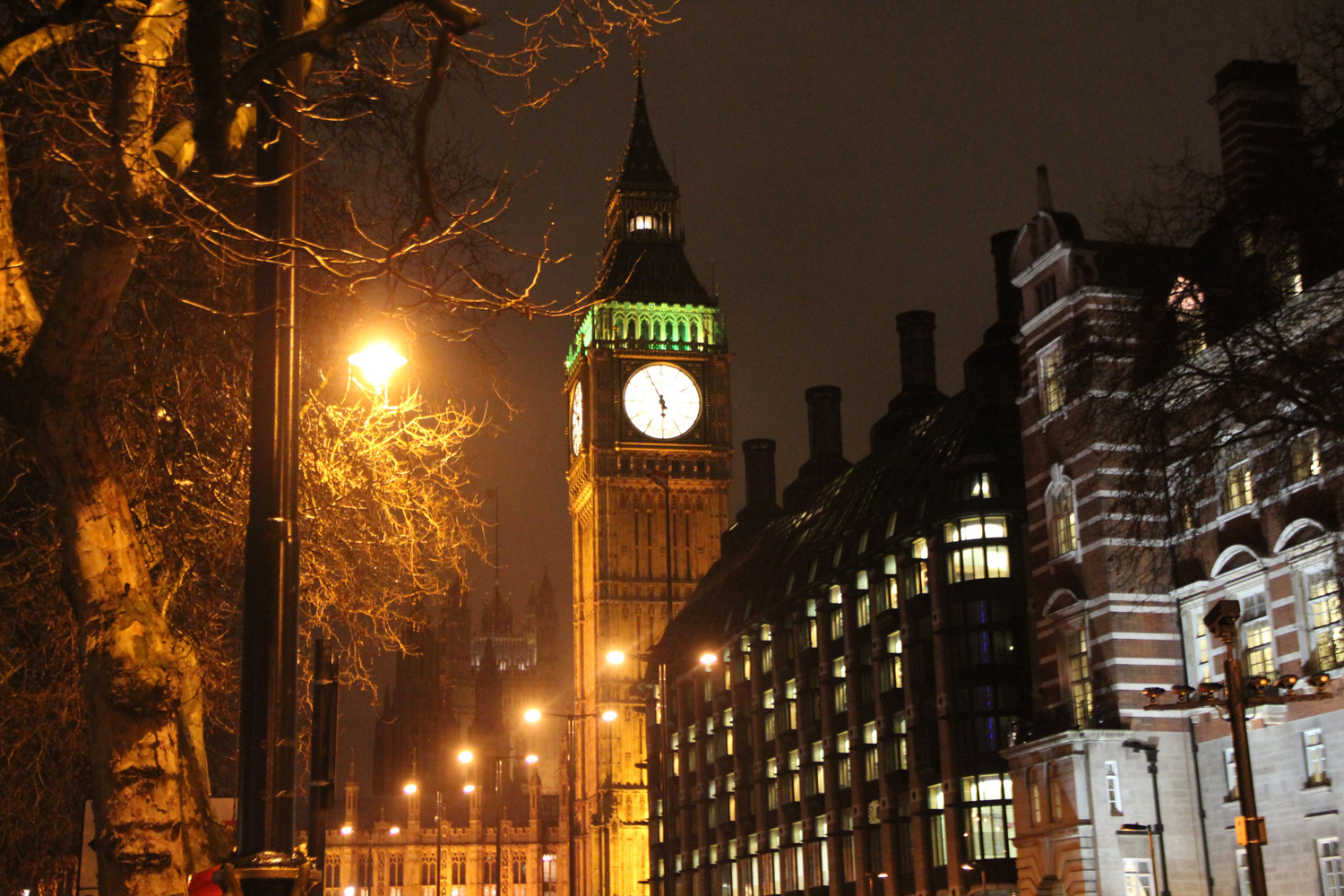
London's Big BenAnders went to England for a few days and visited Steve Williams, shibu-chō in Harrow Shibu. There was obviously some training when the United Kingdom Shorinji Kempo Federation (UKSKF) organized a couple of events. It was a half-day for yūdansha (black belts) in Acton, where the instructors for the day was Steve Wiliams and our own Anders Pettersson.
On the Sunday they had a one day gasshuku (training camp) in Peterborough, where the teaching also was made ​​by Maehara-sensei, 7 dan seihanshi and also an official WSKO instructor. Continue reading

To Buy Dōgi & Obi

Dōgi

Dōgi - Black LabelThere are Shorinji Kempo dōgi (training suit) in a number of different qualities and you can buy them from two different stores, Maekawa shouten and Ozaki. They have the same kind of dōgi and the same prices, so it does not matter much which shop one choose to buy from. We usually recommend the models “Black Label” or “Gold Label” for our adult members, and to children we recommend “White Label”. Continue reading

About the Grading System

Zenzen shugaku - Calligraphy by Morikawa Zeoh sensei

Zenzen shugaku – Calligraphy by Morikawa Zeoh sensei

In Shorinji Kempo, we have, as in most other Japanese budo (martial arts), a grading system. The grading system (kaikyū seido [階級制度]) is set up as a step by step curriculum so that it is easier to learn and it is based on the idea of zenzen shugaku [漸々修学], ie. step by step learning. All branches in the whole world follows the same kamokuhyō (curriculum), which also specifies minimum requirements for how long time it must be between gradings, and how many practice sessions you need before you are qualified to test for the next level. In Shorinji Kempo, there are three different types of ranks, they are explained in more detail in the following paragraphs. All grading certificates, for both kyū as well as dan ranks, are issued by Shorinji Kempo Hombu.

bukai
Bukai

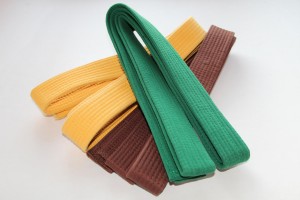
Coloured belts (obi) which indicates the kyū rank of kenshi

Coloured belts (obi) which indicates the kyū rank of kenshi

The first type of grading one encounter is bukai [武階], “martial rank”, which means kyū and dan ranks, just as in most other martial arts. These gradings include both a practical test of the techniques, as well as a theoretical test. For kyū grades it is a written homework and for dan grades it is a written homework and a written test on the day of the grading. For higher dan grades there is also an interview.

For children that are 9 years old or younger there are eight kyū ranks and for all who are 10 years or older there are six kyū ranks. Children that are 12 years or younger have a somewhat different kamokuhyō (curriculum) where all so called gyaku waza (techniques that attacks joints) are removed. Kyū ranks begin with a high figure and goes down to first kyū which is the level before black (dan grade). When one are new one wear a white belt, this is called minarai (beginner). The youngest children have yellow belt for the ranks of 8th & 7th kyū, then there are green belt for the grades 6th, 5th, & 4th kyū, and brown belt for 3rd, 2nd & 1st kyū. Dan ranks begin with 1 dan (shodan), 2 dan (nidan) and so on, up to 9 dan which is the highest bukai rank in Shorinji Kempo.

hōkai
Hōkai

The second type of degree is hōkai [法階], which roughly means philosophical rank. If you meet the criteria, you can get the first four hōkai ranks together with the corresponding bukai rank. Then hōkai ranks come after bukai, one must have had fifth dan a certain period of time before one can make the written test for next hōkai rank daikenshi, etc. This is the order of the hōkai ranks: junkenshi [准拳士], shōkenshi [少拳士], chūkenshi [中拳士], seikenshi [正拳士], daikenshi [大拳士], junhanshi [准範士], seihanshi [正範士], daihanshi [大範士].

sōkai
Sōkai

Wagesa - that kenshi with sōkai rank can wear

Wagesa – that kenshi with sōkai rank can wear

The third type of ranking in Shorinji Kempo is sōkai [僧階], “priesthood ranks.” These are for those who join sōseki [僧籍] (priesthood). There are eleven levels of sōkai and they are shō dōshi [少導師], gon chū dōshi [権中導師], chū dōshi [中導師], gon dai dōshi [権大導師], dai dōshi [大導師], gon shō hōshi [権少法師], shō hōshi [少法師], gon chū hōshi [権中法師], chū hōshi [中法師], gon dai hōshi [権大法師], dai hōshi [大法師].
In principle, one must train in a dōin (available only in Japan) to get sōkai ranks.

West Coast Camp

Christer and Simon practice during the camp in Gothenburg

Christer and Simon practice during the camp in Gothenburg

During the weekend of January 12 to 13 there was a Gasshuku (training camp) in Gothenburg, that was focused on embu, but there were also a lot of time for seihō. We were five kenshi from Karlstad who went down to Gothenburg early on Saturday morning. It was Christer, Alva, Simon Pelle and Anders.

Continue reading

Visit by Pontus Liljequist as well as several kenshi from Skövde

Andreas from Skövde in action with Pontus

Andreas from Skövde in action with Pontus

During the regular practice session on Saturday the 17th of November, we were visited by Pontus Lijequist, 4 dan seikenshi and former shibu-chō for Stockholms Studenter, Pontus was also one of the very first who started to practice Shorinji Kempo Karlstad (see here). On top of that we had as many as five kenshi from Skövde shibu visiting as well.

Continue reading